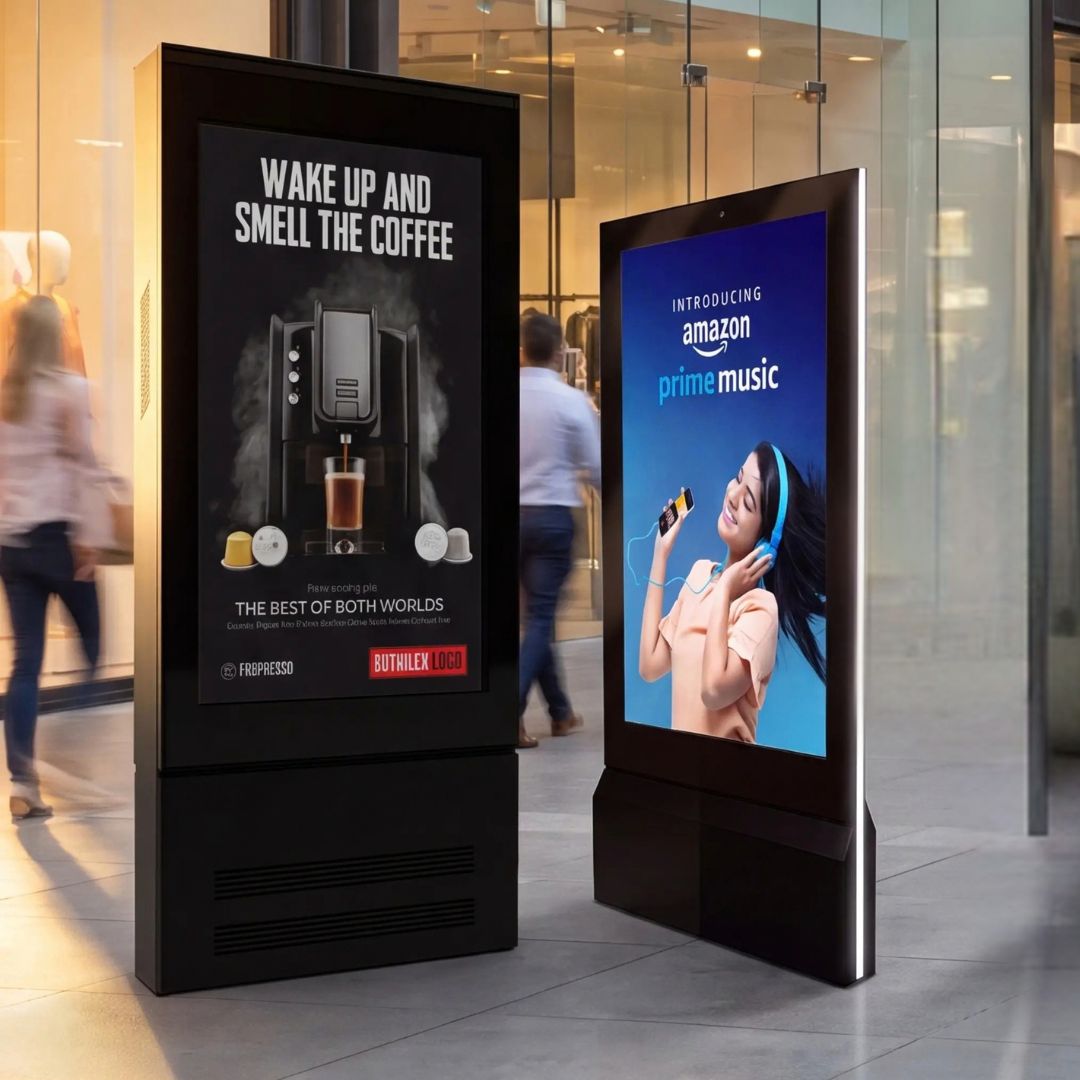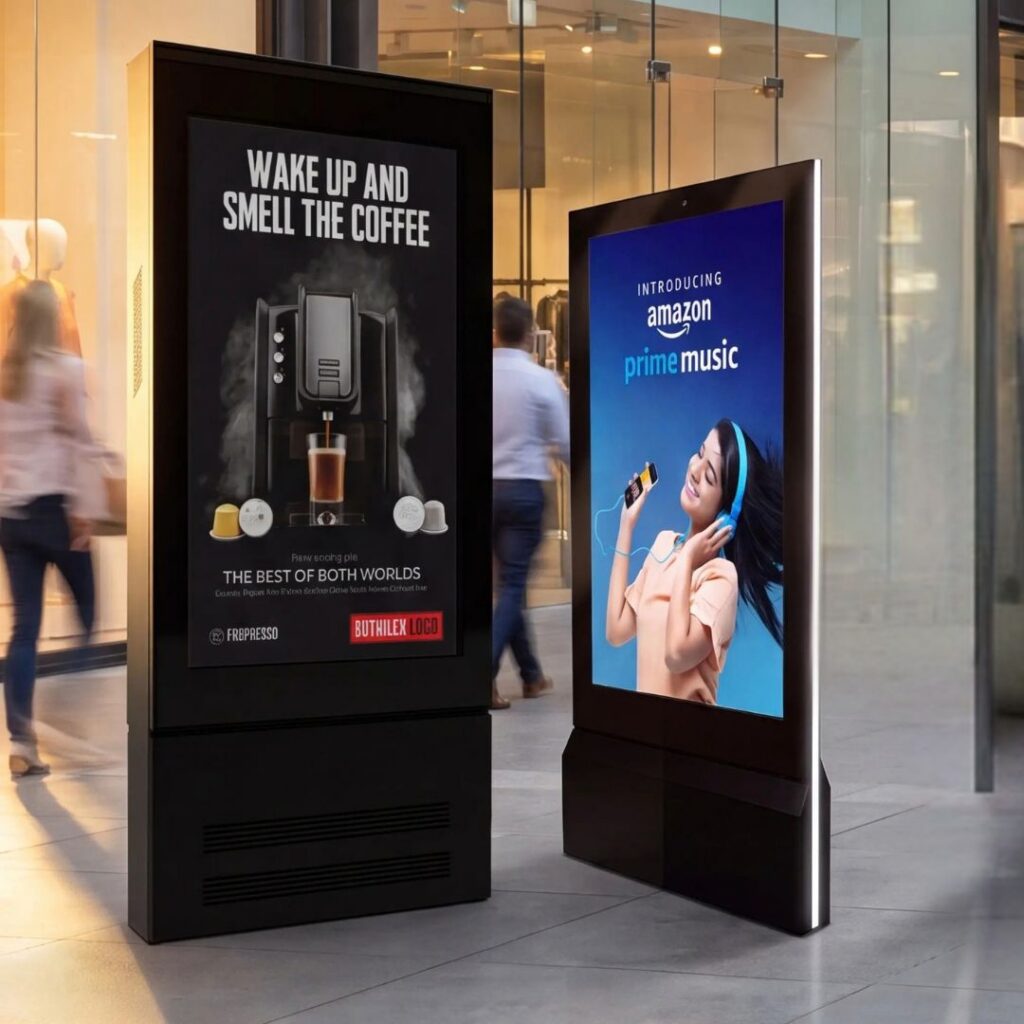

When purchasing in digital signage, a quote doesn’t tell you much
The price on a quote is the easiest number to compare, but do you know what you are really buying?
The real cost of a digital signage network shows up later down the track: in poor design consideration, lacklustre manufacturing quality, dark screens, service callouts, replacement units and advertisers who quietly lose confidence.
When you sell media, advertisers are not only buying screen time. They are buying the environment their brand appears in. Enclosures with off-the-shelf designs from China, noisy units or a dark screen in a busy centre tells an advertiser more about your network than any rate card. Poor presentation is a cost too, paid in unsold inventory and weaker rates.
The enclosure is what protects everything inside it: the panel, the media player, the power supply and your reputation with the venue. That is why quality from design through to manufacture is our first priority at D2P. We do not aim to be the cheapest enclosure on the market; we aim for the right balance of design, cost and quality, so your network looks right on day one and keeps earning for years.
Don’t be sold on price
Most enclosure suppliers win projects on price. The model is simple: design to a minimum, manufacture offshore and ship finished units directly from China to site. On paper, the numbers look hard to beat.
The catch is what happens after installation. Generic units are built for a generic brief, not for your venue, your climate or your maintenance team. Heat builds up, seals fail, components are hard to reach and replacement parts sit weeks away. The savings made at purchase are quietly spent again on callouts, downtime and early replacements.
We take a different approach. Every D2P enclosure is designed around how it will be installed, used, serviced and eventually retired.
1. We design for the whole product lifecycle
An enclosure has a long life, and every stage of it matters. We consider the full lifecycle from the first sketch: how the unit will be manufactured, how it will be installed, how it will be maintained in the field, and what happens to it at end of life.
Thinking this way early means fewer compromises later. Materials are chosen for durability and recoverability, assemblies are designed to come apart cleanly, and upgrades can be made without scrapping the whole unit. The result is an enclosure that lasts, so you are not paying to replace hardware years before you planned to.
2. The details are where quality lives
The difference between a good enclosure and a great one is usually measured in millimetres. We factor in the details that cheaper units leave to chance:
- Shadow gaps for ultra-clean timeless design
- Ventilation and heat dissipation designed as a complete thermal system. Intake, exhaust and filtration work together to move air through the enclosure, while heat is drawn away from the panel, media player and power supply so every component stays within its operating range.
- Accent lighting for architectural integration and to draw the eye to the unit.
- Seals are not an afterthought. They are specified and positioned properly to keep out dust, moisture and cleaning chemicals.
- Glass and screen protection chosen for clarity, impact resistance and low reflection in bright venues.
- Cable management planned from the start, with clean entry points and secure routing so nothing is pinched, exposed or tampered with.
- Smart RFID security locks that keep the public out while giving authorised technicians quick access.
- Finishes selected to resist scuffs, fingerprints and fading, so the enclosure still looks new years after install.
Get these right and screens run cooler, last longer and look better every day they are on. Heat and moisture are common causes of avoidable screen failures, so every detail here is a callout, a replacement panel or a dark screen that never happens.
3. Built to be serviced
Every screen network needs maintenance at some point. The question is whether a technician can fix a fault in minutes or has to pull the whole unit off the wall.
D2P enclosures are designed so key components can be accessed and replaced easily. Media players, power supplies, fans and panels are placed where they can be reached safely and swapped quickly. That means shorter service visits, lower labour costs and screens back on air sooner. Across a whole network and its full life, the minutes saved on every visit add up to real money.
4. Designed to fit the space
A screen does not sit in isolation. It sits in a shopping centre, an office lobby, a transport hub or a retail floor, and it should look like it belongs there.
Before we finalise a design, we assess how each enclosure will integrate into the architecture and design language of the centre or building. Sightlines, finishes, foot traffic and surrounding fixtures all inform the result. The outcome is a network that complements the venue, which landlords appreciate and advertisers notice. A screen that looks like it belongs is easier to sell, easier to keep in place and easier to roll out across a portfolio.
5. Assembled and supported in Australia
D2P has Australian-based assembly, warehousing and a local technical team. Units are assembled and checked here before they reach site, so issues are caught in our warehouse rather than in your venue.
Holding stock locally also means spare parts and replacement units are days away, not weeks, and every day saved is a day of inventory back on sale. When you need help, you speak to people who know the product, work in your time zone and can get on site.
6. Every enclosure monitors its own health
The best time to fix a fault is before anyone sees it. That is why every D2P enclosure includes technical health monitoring through the integrated D2P EMS unit.
The EMS unit keeps watch on the conditions inside each enclosure, so problems can be flagged early rather than discovered by a customer or an advertiser. Paired with our managed services, it gives you ongoing visibility across your network and a team ready to act on what the data shows. Catching a fault early costs far less than a failed unit, an urgent callout and a gap in an advertiser’s campaign. Less guesswork, fewer blank screens and a clear picture of how your assets are performing.
Don’t get stung on failing units
The purchase price is only one line in the true cost of a screen network. Every hour a screen is dark is an hour of inventory you cannot sell. Every faulty unit means a callout, a replacement and another round of freight and installation.
When you factor in the cost of downtime and replacing faulty units, a D2P enclosure is worth the investment from the very first install. You get a network that looks premium, stays on air and is backed by a local team that stands behind it.
Planning a new network or upgrading an existing one? Get in touch with the D2P team to talk through your project.